
واشنطن تعلن استعدادها تسهيل التواصل بين دمشق و”قسد” وسط تصاعد التوتر

The recent developments in Syria, particularly in Aleppo, have brought the country’s complex political landscape into sharp focus. A key element of this is the evolving relationship between the Syrian government, the United States, and the Syrian Democratic Forces (SDF). U.S. Envoy to Syria Tom Barrack’s statements on Saturday regarding continued support for the Syrian government during a transitional phase, alongside ongoing partnership with the SDF, signal a delicate balancing act by Washington. This article delves into the details of Barrack’s visit, the escalating tensions in Aleppo, and the broader implications for Syria’s future.
دعم أمريكا للحكومة السورية والانفتاح على قسد: تطورات حاسمة (US Support for the Syrian Government and Opening to the SDF: Crucial Developments)
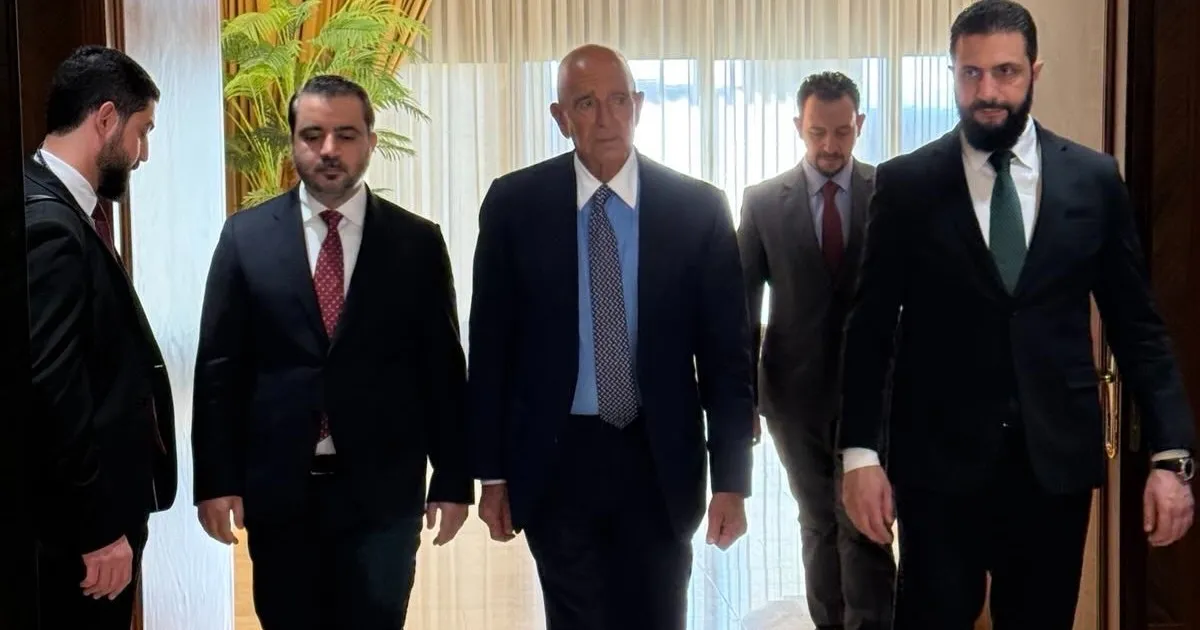
U.S. Envoy Tom Barrack announced on Saturday that the United States supports the Syrian government during the transitional period, while simultaneously maintaining its partnership with the Syrian Democratic Forces (SDF). This dual approach, conveyed during a visit to Damascus where he met with President Ahmad al-Shara and Foreign Minister Asaad al-Shibani, represents a nuanced strategy aimed at fostering stability and a unified Syria. Barrack, acting on behalf of President Donald Trump and Secretary of State Marco Rubio, also expressed Washington’s willingness to facilitate “constructive” communication between the Syrian government and the SDF. This offer comes amidst growing U.S. concern over recent events in Aleppo.
تصعيد حلب: اتهامات متبادلة وإعلان الجيش السوري وقف العمليات (Aleppo Escalation: Mutual Accusations and the Syrian Army’s Announcement of Ceasefire)
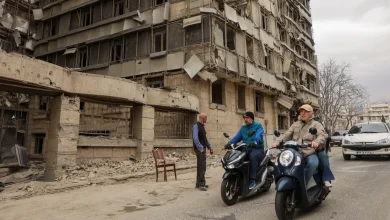
The Syrian Army has accused the SDF of launching an attack on Aleppo using ten Iranian-made drones, resulting in casualties and material damage. According to a statement from the Syrian Army’s Operations Directorate, reported by SANA news agency, this represents a new escalation in the SDF’s military actions against the Syrian people. In response, the Syrian Army stated it targeted the launch sites of the drones and destroyed several armored vehicles belonging to the SDF.
However, the SDF vehemently denied these claims, dismissing the Syrian Army’s announcement of a ceasefire in Sheikh Maqsoud neighborhood as a “blatant attempt to mislead public opinion.” They asserted that fighting continued in the area. The Syrian Foreign Ministry clarified that the operation in Sheikh Maqsoud and al-Ashrafiya neighborhoods was a limited law enforcement action aimed at protecting civilians following repeated violations of security arrangements with the People’s Protection Units (YPG), a key component of the SDF.
“فرصة محورية” لسوريا موحدة: رؤية الإدارة الأمريكية (A “Pivotal Opportunity” for a Unified Syria: The US Administration’s Vision)
Barrack characterized the current moment as a “pivotal opportunity” for a new, unified Syria, where all components are treated with respect and dignity, and have effective participation in governance and security institutions. He indicated that Trump approved lifting sanctions to “give Syria a chance to move forward.” This signals a potential shift in U.S. policy, moving away from a purely punitive approach towards one that encourages engagement and reconstruction. The U.S. government welcomes what it calls the “historic transitional phase” in Syria and affirms its support for the Syrian government under President al-Shara in its efforts to achieve stability, rebuild national institutions, and fulfill the aspirations of all Syrians for peace, security, and prosperity.



اتفاق دمج قسد: التحديات المستمرة (SDF Integration Agreement: Ongoing Challenges)
The U.S. envoy highlighted the renewed commitment from the Syrian government to the integration agreement with the SDF, originally signed in March 2025. This agreement aims to integrate SDF forces into national institutions, safeguarding Kurdish rights and bolstering Syria’s unity and sovereignty. However, the recent clashes in Aleppo are seen as a potential setback to this agreement, prompting Barrack to urge all parties to exercise maximum restraint and return to dialogue based on the agreements of March 10th and April 1st, 2025.
The issue of قسد (SDF) integration remains a central challenge, as the Kurdish authorities, backed by the U.S., have established a semi-autonomous administration in northeastern Syria and parts of Aleppo, resisting full integration into the central government. The ongoing tensions underscore the difficulties in reconciling competing interests and achieving a lasting political settlement.
دور الإقليمي والجهود الدبلوماسية (Regional Role and Diplomatic Efforts)
Barrack emphasized the importance of regional and international support for this vision, calling on neighboring countries and the international community to provide cooperation and assistance. He specifically mentioned the positive roles played by the United States, Saudi Arabia, Qatar, Turkey, France, Britain, and Masoud Barzani (leader of the Kurdistan Democratic Party in Iraq) in supporting Syria’s stability and territorial integrity. The U.S. is seeking to leverage these relationships to encourage a constructive outcome to the current crisis. The situation requires careful دبلوماسية (diplomacy) to prevent further escalation and maintain the momentum towards a political solution.
موقف الحكومة السورية: حماية المدنيين والحفاظ على وحدة الأراضي (The Syrian Government’s Position: Protecting Civilians and Preserving Territorial Integrity)
The Syrian government maintains that its actions in Sheikh Maqsoud and al-Ashrafiya were limited law enforcement operations designed to protect civilians after repeated violations of security arrangements by the YPG. The Ministry of Foreign Affairs stressed that these measures were taken transparently and in accordance with the law, without targeting any specific ethnic or religious group. The government’s stated goal is to consolidate the authority of legitimate state institutions as a fundamental condition for stability. This aligns with the broader objective of maintaining وحدة الأراضي السورية (Syrian territorial integrity).
In conclusion, the situation in Syria remains highly volatile. The U.S. envoy’s visit and statements represent a cautious attempt to navigate the complex dynamics between the Syrian government, the SDF, and regional actors. The success of this approach hinges on the willingness of all parties to de-escalate tensions, adhere to existing agreements, and engage in genuine dialogue. The focus on a unified Syria and the potential lifting of sanctions offer a glimmer of hope, but significant challenges remain, particularly concerning the integration of the SDF and the restoration of full government control over all Syrian territories. Continued monitoring of the situation and sustained diplomatic efforts are crucial to prevent a further deterioration of the security situation and pave the way for a lasting peace.