
تحالف دعم الشرعية في اليمن: سنواجه أي تحرك عسكري يقوض خفض التصعيد

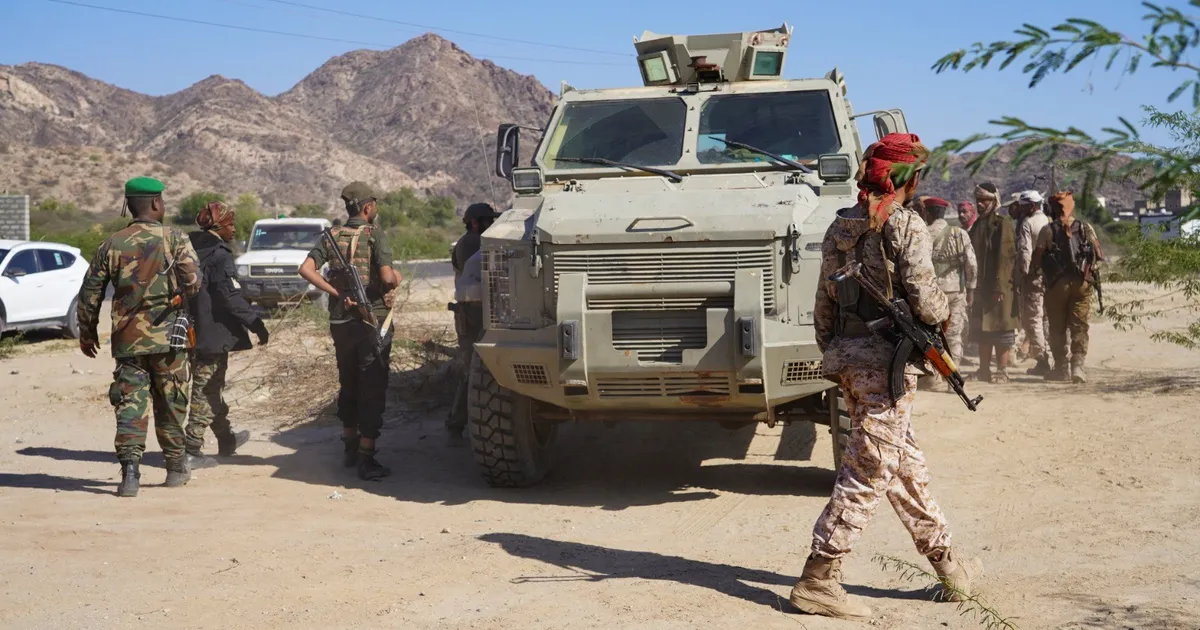
The situation in Yemen remains complex, with recent escalations in the south prompting strong reactions from regional powers and international bodies. On Saturday, the Coalition Supporting Legitimacy in Yemen emphasized that any military movements contradicting de-escalation efforts “will be dealt with to protect civilians.” Simultaneously, Saudi Defense Minister Prince Khalid bin Salman called on the Southern Transitional Council (STC) in Yemen to de-escalate and withdraw its forces from Hadramout and Mahra, responding to Saudi-Emirati mediation. This article delves into the details of these developments, the concerns raised, and the ongoing efforts to achieve stability in the war-torn nation. The focus remains on the Yemen crisis and the recent escalations.
Coalition Reinforces Commitment to Civilian Protection Amidst Escalations
The Coalition reiterated its commitment to safeguarding civilians following reports of violations attributed to STC-affiliated armed elements in Hadramout Governorate. Coalition Spokesman, Brigadier General Turki Al-Maliki, stated the action was in response to a request from the President of the Yemeni Presidential Leadership Council, Rashad Al-Alimi, regarding immediate measures to protect civilians facing severe humanitarian abuses.
Al-Maliki highlighted the ongoing joint efforts of Saudi Arabia and the United Arab Emirates to de-escalate tensions, facilitate the withdrawal of STC forces, and hand over camps to the Shield of the Homeland forces, enabling local authorities to fulfill their responsibilities. He firmly stated that any military movements that undermine these efforts would be directly addressed to protect civilian lives and ensure the success of the Saudi-Emirati mediation. This underscores the Coalition’s dedication to maintaining a secure environment for the Yemeni people.
Saudi Arabia Urges STC Withdrawal and Dialogue
Prince Khalid bin Salman directly appealed to the STC to respond to the Saudi-Emirati mediation efforts, calling for an end to the escalation and the withdrawal of forces from camps in Hadramout and Mahra, in southern Yemen. In a statement posted on X (formerly Twitter), the Minister acknowledged that many Southern components and leaders recognize the significant challenges facing Yemen currently.
He cautioned against allowing spoilers to achieve their objectives in Yemen and the region, stressing that the Southern issue should be resolved through consensus, fulfilling commitments, and building trust among all Yemenis, not through adventurism. This message emphasizes the importance of a unified approach to resolving the political disputes in Yemen.


Recognizing the Complexity of the Southern Issue
Prince Khalid bin Salman further clarified that the unfortunate events since the beginning of December 2023 in Hadramout and Mahra have created divisions in the face of the enemy. He affirmed that the Kingdom considers the Southern issue a crucial component of any comprehensive political solution and will not be ignored or marginalized. This acknowledgement is vital for fostering inclusivity in future negotiations.
Presidential Leadership Council Seeks Coalition Support
Prior to the Coalition’s statement, President Al-Alimi had requested support from the Coalition to assist the army in “imposing calm and protecting Saudi-Emirati mediation efforts.” He also called for all necessary military measures to protect civilians in Hadramout. The Yemeni News Agency (Saba) reported that Al-Alimi urged the STC leadership to prioritize the public interest and refrain from unjustified escalation in the eastern governorates of Yemen.
Al-Alimi chaired an emergency meeting of the National Defense Council on Friday to discuss the situation in Hadramout and Mahra, prompted by the “unilateral actions and military escalation by the Southern Transitional Council.” The council reviewed reports detailing the developments in the eastern governorates and the “serious violations of the rights of civilians” accompanying the STC’s military movements, culminating in recent attacks in Wadi Nahab in Hadramout, which directly contradicted the ongoing mediation efforts.
International Concerns and Calls for Restraint
The escalating tensions have also drawn concern from the international community. The United States, through its Secretary of State, expressed its worry regarding the recent events in southeastern Yemen, calling for “restraint and continued diplomatic efforts to reach a lasting solution.” The US acknowledged and praised the diplomatic leadership of Saudi Arabia and the UAE, reaffirming its support for all initiatives aimed at promoting shared security interests. This highlights the international community’s desire for a peaceful resolution to the conflict in Yemen.
Saudi Arabia Condemns Unilateral Actions
The Saudi Ministry of Foreign Affairs issued a statement on Thursday condemning the STC’s unilateral military movements in Hadramout and Mahra. The Ministry stated these actions were undertaken without the consent of the Presidential Leadership Council or coordination with the Coalition leadership, leading to unjustified escalation that harmed the interests of the Yemeni people and the Southern cause, as well as the Coalition’s efforts.
The Ministry emphasized the Kingdom’s consistent focus on unity and its efforts to reach peaceful solutions to the situation in the two governorates. It revealed that Saudi Arabia, in collaboration with the UAE, had dispatched a joint military team to Aden to arrange for the withdrawal of STC forces to their previous locations outside Hadramout and Mahra, and to hand over camps to the Shield of the Homeland forces and local authorities under the supervision of the Coalition.
Arab and Islamic Calls for De-escalation
Beyond regional and international powers, various Arab and Islamic organizations have also voiced their concerns and called for de-escalation. The Arab League and the Muslim World League, along with several Arab and Islamic countries, urged an end to the military escalation in Yemen and support for the legitimate leadership to preserve the country’s unity. These calls demonstrate a broad consensus on the need for stability and a peaceful resolution to the ongoing crisis.
In conclusion, the recent escalations in Hadramout and Mahra represent a significant challenge to the fragile peace process in Yemen. The firm stance taken by the Coalition, coupled with the diplomatic efforts of Saudi Arabia and the UAE, aims to de-escalate the situation and protect civilians. The international community’s concern and calls for restraint further underscore the urgency of finding a lasting solution. The key to resolving the Yemen crisis lies in dialogue, consensus-building, and a commitment to the unity and stability of the nation. Continued monitoring of the situation and support for the Saudi-Emirati mediation are crucial for preventing further deterioration and paving the way for a more peaceful future for Yemen.