
وزيرا خارجية مصر وروسيا يبحثان المرحلة الانتقالية في غزة وأوضاع السودان

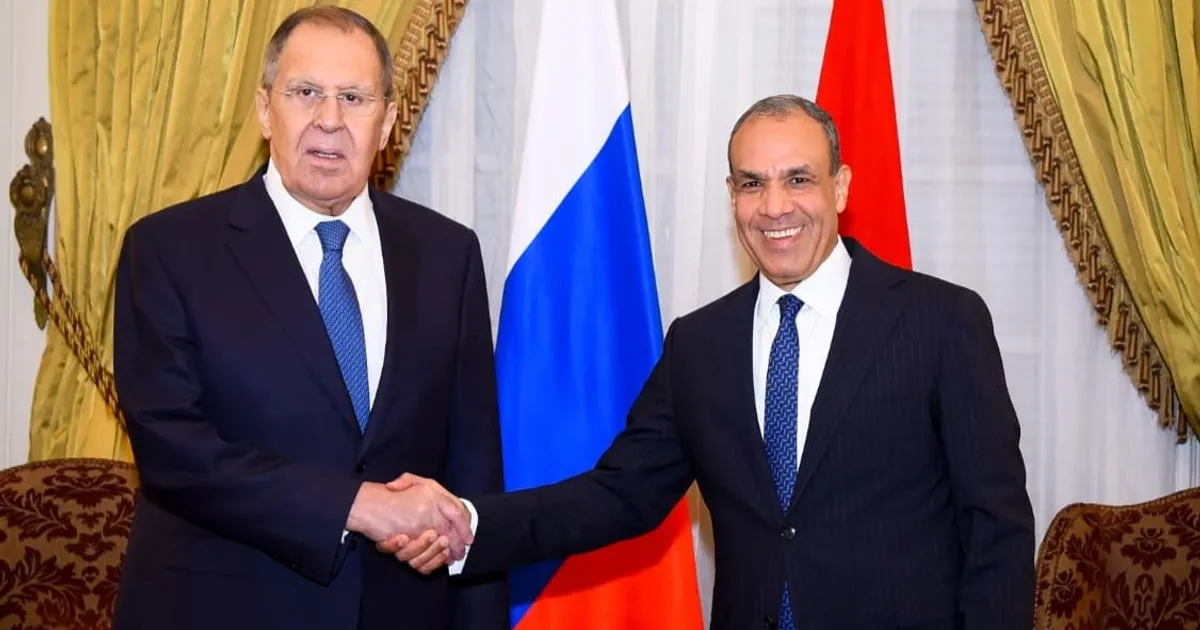
The meeting between Egyptian Foreign Minister Sameh Shoukry and his Russian counterpart Sergey Lavrov on Friday in Cairo underscored Egypt’s pivotal role in regional diplomacy, particularly concerning the urgent situation in the Gaza Strip and broader Arab concerns. Discussions centered on Egypt’s vision for the transitional phase in Gaza, emphasizing the need for international stability and a return to Palestinian Authority control. This article delves into the key takeaways from the meeting, highlighting Egypt’s stance on regional issues and its ongoing efforts to foster peace and security.
Egypt’s Vision for Gaza: Stability and Palestinian Governance
The core of the discussions revolved around the future of the Gaza Strip. Minister Shoukry presented Egypt’s vision for Gaza, stressing the importance of enabling an international stabilization force. This force, he argued, is crucial to maintaining order and preventing a resurgence of conflict. Simultaneously, Egypt advocates for the formation of a technocratic Palestinian committee to administer the Strip, paving the way for the eventual return of the Palestinian Authority (PA) to full governance. This phased approach, according to the Egyptian perspective, is essential for initiating early recovery and reconstruction efforts in the devastated territory.
The emphasis on a PA return is a clear signal of Egypt’s commitment to a two-state solution and its rejection of any attempts to separate Gaza from the West Bank. Egyptian officials firmly believe that a unified Palestinian government is the only viable path towards lasting peace and stability.
Rejection of Separation and Support for a Two-State Solution
Speaking through the official spokesperson for the Egyptian Ministry of Foreign Affairs, Ambassador Tamim Khallaf, Egypt unequivocally rejected any measures that would solidify the division between the West Bank and Gaza. Such actions, Egypt believes, would severely undermine the prospects for a comprehensive and just resolution based on the two-state principle. The need for the international community to actively work towards de-escalation in the West Bank, particularly addressing settler violence against Palestinian civilians, was also strongly emphasized. Egypt condemned the ongoing expansion of settlements in the West Bank as a major obstacle to peace.
Regional Developments and Collaborative Efforts
Beyond Gaza, the ministers engaged in extensive consultations on broader regional developments. Both sides exchanged views on issues of mutual concern, including the implementation of the Sharm el-Sheikh peace agreement and the facilitation of humanitarian aid to Gaza. The conversation also touched upon the ongoing situation in Sudan, Lebanon, Syria, and the Iranian nuclear file, showcasing the multifaceted nature of their diplomatic engagement.


Shoukry detailed Egypt’s active role in supporting stability and de-escalation in Gaza, alongside its efforts to ensure the implementation of the Sharm el-Sheikh agreement. The continuous flow of humanitarian aid into the Strip remains a top priority for Egypt, as does transitioning towards the fulfillment of the agreement’s second phase commitments. This emphasizes Egypt’s logistical and humanitarian leadership in the region.
Addressing the Crisis in Sudan
The deteriorating situation in Sudan received significant attention during the meeting. Minister Shoukry expressed Egypt’s deep concern over the continued escalation of violence and the resulting horrific abuses against Sudanese civilians. He outlined Egypt’s efforts within the Quadrupartite Mechanism – a collaborative framework involving Egypt, Saudi Arabia, the United Arab Emirates, and the African Union – aimed at achieving a humanitarian ceasefire and ultimately, a cessation of hostilities.
Egypt is actively working to establish safe corridors and shelters for civilians, providing much-needed security and protection. Shoukry reaffirmed Egypt’s unwavering position advocating for Sudan’s unity, territorial integrity, and the support of its state institutions. He reiterated that certain “red lines” concerning Sudan’s security cannot be crossed, as they directly impact Egypt’s national security.
Consistent Stance on Lebanon, Syria, and Iran
Regarding Lebanon and Syria, Egypt’s position remains consistently focused on supporting sovereignty, security, and stability. Egypt supports Lebanon’s unity and calls for respecting the sovereignty and territorial integrity of Syria, opposing any interventions that could destabilize either nation. Egyptian diplomacy advocates for a comprehensive political process in Syria that reflects the aspirations of the Syrian people.
On the issue of the Iranian nuclear file, Shoukry stressed the importance of continued efforts to de-escalate tensions, build confidence, and create an environment conducive to diplomatic solutions. He called for resuming dialogue to reach a comprehensive agreement that addresses the concerns of all parties and contributes to regional security and stability.
Strengthening Egypt-Russia Bilateral Ties
The ministers dedicated a portion of the discussions to exploring avenues for enhancing the bilateral relations between Egypt and Russia. Both sides expressed satisfaction with the strong partnership that exists and acknowledged the growing momentum in various political and economic fields.
Specific projects highlighted included the construction of the Dabaa nuclear power plant and the establishment of the Russian Industrial Zone in the Suez Canal Economic Zone. These initiatives are seen as key drivers for boosting Russian investment in Egypt and expanding cooperation in crucial sectors such as energy, tourism, and transportation/logistics.
The Russian Foreign Minister affirmed Russia’s recognition of Egypt’s active and constructive role in the region, supporting peace, security, and stability. He underscored the importance of continued consultation and coordination on issues of mutual interest.
In conclusion, the meeting between the Egyptian and Russian Foreign Ministers represented a critical opportunity for discussing pressing regional challenges. Egypt’s vision for a stable and unified Gaza, underpinned by Palestinian governance and international cooperation, serves as a cornerstone of its diplomatic efforts. Coupled with its engagement in Sudan, Lebanon, Syria and the Iranian nuclear file, and its commitment to strengthening bilateral ties with Russia, Egypt continues to play a crucial and proactive role in shaping a more peaceful and prosperous Middle East. Further collaboration and dialogue are essential to building a lasting and sustainable future for the region.