

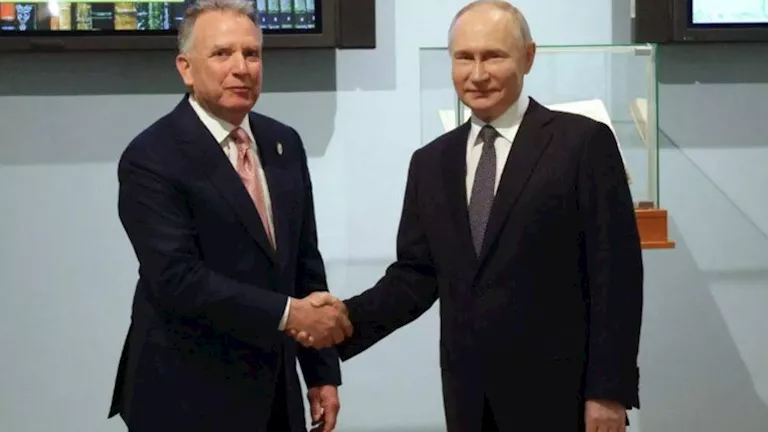
The Kremlin has indicated that discussions with the United States regarding the ongoing conflict in Ukraine are productive, yet substantial work remains to achieve a resolution. This assessment follows hours of talks involving Igor Yushakov, the Presidential Aide, with US envoy Steve Witkof and Jared Kushner, son-in-law of former US President Donald Trump. The situation in Ukraine remains complex, and the path to peace is laden with challenges and competing interests.
المحادثات الأمريكية الروسية حول أوكرانيا: مسار شائك نحو السلام
Following the meetings, Yushakov stated that while no breakthrough agreement has been reached concerning territories currently under Russian control, some American proposals are open for discussion. He characterized the conversations as “useful, substantive, and very constructive,” but stressed the need for continued, intensive efforts. The Kremlin confirmed that President Vladimir Putin outlined several key political signals for Trump concerning the situation in Ukraine to Witkof.
Both sides agreed to maintain discretion regarding the specifics of the negotiations. The US envoys are slated to return to the United States, present their findings to Trump, and maintain communication with their Russian counterparts. This discreet approach highlights the sensitivity of the discussions and the potential for setbacks.
تحذيرات متبادلة وتصعيد في الخطاب
Prior to the meeting, Putin issued a stark warning to European nations, suggesting a rapid defeat in a direct conflict with Russia. He also dismissed European proposals concerning Ukraine as “completely unacceptable” to Moscow. This firm stance underscores the limitations of European influence in these bilateral discussions, and the primacy of the US-Russia dynamic. The conflict in Ukraine has triggered a geopolitical shift, forcing a reassessment of longstanding alliances and security arrangements.
Trump himself has consistently expressed a desire to end the war, attempting mediation through summits with Putin (in Alaska in August) and engagements with Ukrainian President Volodymyr Zelenskyy. However, these efforts have yet to yield tangible results. The complicated position of the US in mediating a solution illustrates the difficulties of balancing support for a strategic ally with the necessity to de-escalate and avoid a wider war.
مقترحات السلام الأمريكية وتقاطعات المصالح
Recent weeks have seen a flurry of diplomatic activity, including a leaked 28-point American peace proposal. This proposal, perceived by Ukrainian and European officials as conceding too much to Russia, has raised significant concern. Specifically, the proposal reportedly included elements such as guaranteeing Ukraine’s non-membership in NATO and recognizing Russian control over a substantial portion of Ukrainian territory – around 20%.
Subsequently, European powers presented a counter-proposal, and the US and Ukraine followed with a “revised framework for peace.” During a cabinet meeting in Washington, Trump acknowledged the difficulty of the situation, stating, “Our guys are in Russia now to see if we can get something worked out. Let me tell you, it’s not easy, it’s a mess,” and estimating monthly casualties at 25,000 to 30,000. US Secretary of State Marco Rubio has been actively involved in refining the initial peace plan to address Ukrainian and European anxieties.
Putin has clarified that discussions are not currently centered around a draft agreement but rather on a range of proposals that could form the basis for future agreements. He also highlighted the “significant victory” of Russian forces in capturing the city of Pokrovsk in eastern Ukraine, signaling a continued commitment to achieving its military objectives. The insistence on acknowledging military gains is a key talking point for Russia, and demonstrates its commitment to furthering its position in negotiations.
المطالب الروسية وعقبات السلام المستدام
The core Russian demands include a permanent guarantee against Ukraine’s NATO membership, limitations on the Ukrainian military, full control over the Donbas region, and recognition of Russian sovereignty over Crimea, Zaporizhzhia, and Kherson. Furthermore, Russia insists on protections for Russian speakers within Ukraine. This comprehensive list of demands represents a significant overhaul of the security architecture in Eastern Europe.
Ukraine views these demands as tantamount to surrender, fearing they lay the groundwork for further Russian aggression. The United States, in an attempt to bridge the gap, has offered a 10-year security guarantee for Kyiv. This guarantee, while potentially reassuring to Ukraine, falls short of the full security protection offered by NATO membership.
Ukraine and European powers believe Moscow is pursuing a neo-colonial strategy through military conquest. They warn that a Russian victory would embolden further aggression against NATO member states. This highlights the high stakes of the peace process and the potential for far-reaching consequences beyond Ukraine’s borders. European officials are currently working to shore up support for Ukraine amidst what they consider a punitive peace agreement favorable to Russia. Additionally, there’s concern that meeting Russia’s demands could pave the way for its reintegration into forums like the G8 and open doors for joint ventures in energy and minerals.
آفاق مستقبلية للحل السياسي في أوكرانيا
The situation remains intensely fluid, with negotiations progressing in a discreet manner. While the path to a lasting peace is challenging, and fraught with compromise, the ongoing dialogue between the US and Russia represents a crucial, if imperfect, step in seeking a resolution to the devastation in Ukraine. The ultimate outcome will depend on the willingness of all parties to address the underlying security concerns and find a formula that respects both Ukrainian sovereignty and Russian security interests. Continued diplomatic efforts, focusing on clearly defined goals and realistic expectations are essential to prevent further escalation and achieve a sustainable peace. The world watches with bated breath as the future of Ukraine and the stability of Europe hang in the balance.