
تهديد بصور وفيديوهات.. تأجيل محاكمة 16 فتاة بتهمة ابتزاز ضحايا “منصات

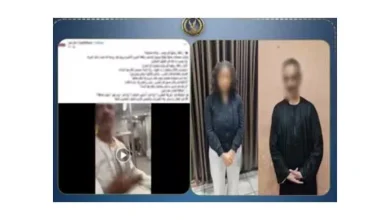
Ramadan Younis reported on December 14, 2025, that the Giza Criminal Court has adjourned the trial of 16 young women, including three foreigners (Malaysian, Chinese, and Sudanese), accused of threatening and blackmailing citizens using private photos and linking them to indecent content to force them to pay “loan” dues. The case has been postponed to January 6th. This incident highlights the growing danger of electronic extortion and the sophisticated methods employed by criminals to exploit vulnerable individuals.
تفاصيل القضية: شبكة الابتزاز الإلكتروني في الجيزة (Details of the Case: An Electronic Extortion Network in Giza)
The Public Prosecution, according to case files No. 4936 of 2025, and registered as No. 3140 of 2025 in the Giza General Prosecution, referred the 16 defendants – identified as E.A., S.A., H.A., Y.A., H.A., J.K., A.M., U.M. (Sudanese nationality), Y. (Malaysian nationality), L.K. (Chinese nationality), E.H., H.M., E.A., M.R., K.A., and S.A. – to the Urgent Criminal Court.
The prosecution alleges that the accused threatened numerous citizens through written messages sent via social media applications. These messages contained threats to disclose compromising information and share it with their families, demanding in return unjustified financial sums. This activity took place between 2022 and 2025 within the jurisdiction of the Al-Omraniya police station in Giza Governorate.
استخدام تطبيقات التواصل الاجتماعي في الجريمة (Using Social Media Applications in the Crime)
The investigation revealed that the defendants created, managed, and utilized social media applications on the internet with the intention of threatening victims and violating their private lives. They reportedly sent emails to family members without consent and published private photos and information of the victims through information technology channels without their knowledge or approval. This constitutes a clear violation of their privacy. The core of the operation revolved around online loan apps used as a lure.
The Public Prosecution further clarified that the defendants deliberately used information technology to process personal data related to the victims, merging it with indecent content to tarnish their reputation and standing. They also misused communication devices to harass and disturb the victims.




اعترافات المتهمين وأقوال الضحايا (Defendants’ Confessions and Victims’ Statements)
Initial investigations involved questioning the first three defendants, who confessed to the charges, admitting to threatening the victims with the publication of compromising material if they failed to meet the financial demands.
Victims were also interviewed. One, identified as a “first-class teacher,” stated that he saw an advertisement for a loan application while browsing Facebook. He downloaded the app to obtain a small loan, but shortly after, received a threatening message demanding payment or facing the public disclosure of compromising images. This illustrates how easily individuals can fall prey to blackmail schemes disguised as financial assistance.
A technical report from the General Administration of Information Technology confirmed the presence of threatening messages and evidence on the mobile phones seized from the first three defendants.
القبض على مسؤولين في تطبيق القروض الإلكترونية (Arrest of Officials in the Electronic Loan Application)
In a related development, the Cybercrime Combatting Department arrested five officials from the “electronic loan” application following a complaint from a citizen. The complainant reported receiving 715 Egyptian pounds from an electronic wallet linked to the app, followed by threatening messages sent to a relative containing abusive language and defamation, in an attempt to force him to pay 1500 Egyptian pounds as alleged loan fees.
The Giza General Prosecution, under the leadership of Counselor Mahmoud Gheitass, the First Attorney General, referred the 16 defendants – including the three foreigners – to the Urgent Criminal Court on charges of threatening and blackmailing citizens using private photos and linking them to indecent content to force them to pay “loan” dues.
مخاطر تطبيقات القروض السريعة (Risks of Quick Loan Applications)
The application in question is available for download only on the Google Play Store for Android devices. It operates by granting loans in exchange for extensive permissions, including access to the camera, location, text messages, contacts, and personal information. If users refuse these permissions, the application will not function.
The application requires users to submit a front and back image of their national ID card, along with a live selfie using the camera, and sets a repayment period of no more than seven days. Failure to repay within this timeframe results in threats to publish the user’s photos and personal information, along with insulting language, to their contact list. This highlights the predatory nature of these apps and the severe consequences for those who use them. The rise in cybercrime related to these apps is a serious concern.
الخلاصة: الحذر من الابتزاز الإلكتروني (Conclusion: Caution Against Electronic Extortion)
This case serves as a stark warning about the dangers of electronic extortion and the deceptive practices employed by criminals through seemingly legitimate online loan apps. It is crucial for individuals to be cautious about sharing personal information online and to avoid engaging with suspicious applications. The authorities are actively combating these crimes, but public awareness and vigilance are essential to protect oneself from falling victim to these harmful schemes. If you suspect you are being targeted by electronic extortion, it is vital to report the incident to the relevant authorities immediately. Protecting your privacy and financial security requires a proactive and informed approach in the digital age.