
“سيناريوهات محاكاة الحرب” ترجح تفوق الصين على أميركا حال اندلاع نزاع تايوان

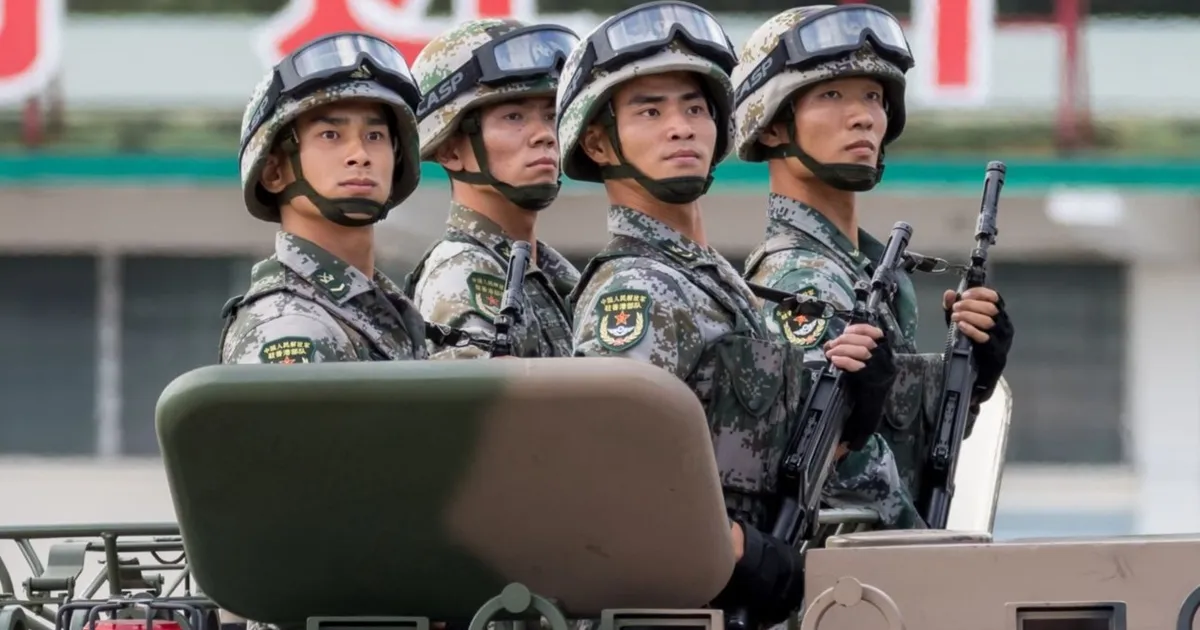
The escalating tensions between the United States and China over Taiwan have become a focal point of global security concerns. Recent, highly classified US government assessments paint a sobering picture: in a potential conflict over Taiwan, China is projected to achieve military victory over the US. This article delves into the details of these assessments, the vulnerabilities exposed, and the steps being taken to address this growing threat, focusing on the potential for a war with China over Taiwan.
تقييمات سرية تكشف عن تفوق صيني محتمل في حرب حول تايوان (Secret Assessments Reveal Potential Chinese Superiority in a War Over Taiwan)
According to reports in the British newspaper The Telegraph, “top secret” US government evaluations warn of a likely defeat for the American military should a conflict erupt concerning Taiwan. The core issue highlighted in the document, titled “Military Superiority,” is the US reliance on expensive, cutting-edge weaponry. This strategy leaves the US vulnerable to China’s ability to manufacture vast quantities of less costly, yet effective, systems. A former national security official from the Biden administration, who reviewed the document, reportedly “went pale” upon realizing the extent of China’s “inexhaustible alternatives” to every US countermeasure. The loss of Taiwan, considered a crucial strategic and symbolic stronghold for the US in the Western Pacific, would represent a significant blow to Washington.
نقاط الضعف الأمريكية: حاملات الطائرات والأسلحة باهظة الثمن (US Vulnerabilities: Aircraft Carriers and Expensive Weapons)
The assessments specifically point to vulnerabilities in the US naval capabilities. Surprisingly, the US’s newest and most advanced aircraft carrier, the USS Gerald R. Ford, frequently suffers “destruction” in military simulation scenarios. Despite its $13 billion price tag and entry into service in 2022, the carrier is susceptible to attacks from diesel-electric submarines and China’s extensive arsenal of hypersonic missiles – weapons capable of traveling at five times the speed of sound. Recent military parades in China showcased the YJ-17 anti-ship missile, boasting an even more alarming speed of eight times the speed of sound.
This reliance on expensive platforms is a key concern. While the Pentagon plans to build nine additional Ford-class carriers, the US has yet to successfully deploy a single hypersonic missile of its own. Eric Gomez, a researcher at the Taiwan Security Observatory, participated in a war game simulation and found that while the results weren’t definitive, US forces sustained substantial losses. “The US loses a large number of ships in the process, and its F-35 fighters and other tactical aircraft in the region are quickly depleted,” he stated. The financial cost of these losses, he added, was “shocking,” with simulations indicating the loss of over 100 fifth-generation aircraft, several destroyers, and two aircraft carriers.
سباق التسلح والتركيز على الطائرات المُسيرة (Arms Race and Focus on Drones)
The US military’s struggles in simulations aren’t new. Last year, the US Secretary of the Army, Pete Hegseth, acknowledged that the US “loses every time” in Pentagon war games against China, predicting that Chinese hypersonic missiles could destroy US aircraft carriers within minutes. China has significantly expanded its inventory of short and medium-range missiles, enabling it to neutralize many of the US’s advanced weapons systems before they can reach Taiwan.


However, the US is attempting to adapt. Recognizing the limitations of its current approach, the US Congress has allocated approximately $1 billion for the production of 340,000 small drones over the next two years. Donald Trump appointed Dan Driscoll, a senior military leader, to oversee efforts to modernize US military technology and counter enemy drone programs. This shift reflects a growing understanding of the effectiveness of low-cost weapons, as demonstrated by the war in Ukraine. The focus on drone warfare is becoming increasingly important.
تحديات الإنتاج والتأخر التكنولوجي (Production Challenges and Technological Lag)
Despite these efforts, the US remains behind its competitors. Experts point out that the US cannot compete with China’s cost-effectiveness, driven by lower labor costs and less stringent regulations. A fundamental shift in US policy will require substantial investment, but defense spending currently stands at its lowest level in nearly 80 years, representing just 3.4% of GDP.
Furthermore, the US faces challenges in scaling up production of complex weapons systems. The defense industry, once comprised of five major companies, has consolidated, leaving fewer players to meet the growing demand. This contrasts with China’s ability to rapidly produce large quantities of military hardware. The threat is compounded by Chinese cyber warfare capabilities, with the “Volt Typhoon” group successfully infiltrating critical infrastructure networks controlling power, communications, and water supplies serving US military bases. This poses a significant risk to the US military’s ability to mobilize forces in the event of a conflict in the Pacific.
موقف الصين والغموض الاستراتيجي الأمريكي (China’s Position and US Strategic Ambiguity)
Chinese President Xi Jinping considers control of Taiwan a “historical inevitability” and has ordered his military to prepare for a potential invasion by 2027. However, he is believed to be hesitant to act without achieving overwhelming military superiority, fearing that failure would be a devastating blow to his 13-year rule.
The US maintains a policy of “strategic ambiguity” towards Taiwan, refusing to explicitly state whether it would intervene militarily in the event of a Chinese invasion. However, since the Eisenhower administration, the US has viewed Taiwan as a vital barrier to Chinese expansion and is legally obligated to provide the island with the weapons necessary for self-defense. The potential for a Taiwan Strait crisis remains high, and the US is actively working to bolster its defenses and strengthen its alliances in the region. The situation demands careful diplomatic maneuvering alongside a robust military preparedness to deter a Chinese invasion of Taiwan.